
Contribution Margin Ratio: What It Is And How To Calculate It
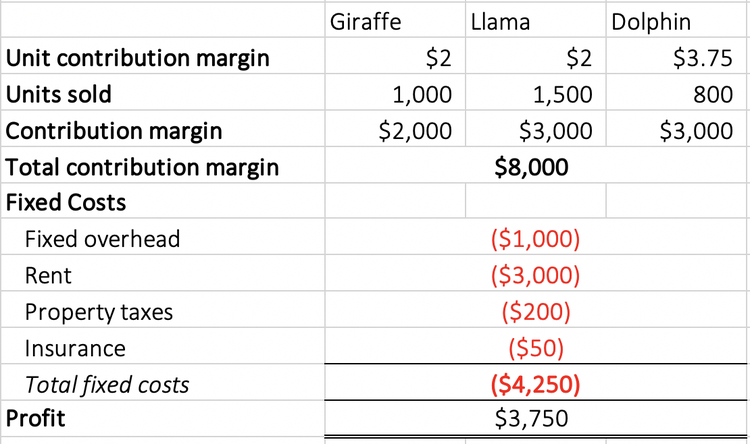
Accordingly, the Contribution Margin Per Unit of Umbrella would be as follows. The concept of this equation relies on the difference between fixed and variable costs. Fixed costs are production costs that remain the same as production efforts increase. Variable costs, on the other hand, increase with production levels. In order to perform this analysis, calculate the contribution margin per unit, then divide the fixed costs by this number and you will know how many units you have to sell to break even.
Contribution Margin: What it is and How to Calculate it
Net sales are basically total sales less any returns or allowances. This is the net amount that the company expects to receive from its total sales. Some income statements report net sales as the only sales figure, while others actually report total sales and make deductions for returns and allowances. Either way, this number will be reported at the top of the income statement. However, they will play an important part in calculating the net income formula. Other financial metrics related to the Contribution Margin Ratio include the gross margin ratio, operating margin ratio, and net profit margin ratio.
Formula and Calculation of Contribution Margin
In other words, your contribution margin increases with the sale of each of your products. Thus, you need to make sure that the contribution margin covers your fixed cost and the target income you want to achieve. For information pertaining to the registration status of 11 Financial, please contact the state securities regulators for those states in which 11 Financial maintains a registration filing. 11 Financial is a registered investment adviser located in Lufkin, Texas. 11 Financial may only transact business in those states in which it is registered, or qualifies for an exemption or exclusion from registration requirements.
Ready to Level Up Your Career?
Regardless of how contribution margin is expressed, it provides critical information for managers. Understanding how each product, good, or service contributes to the organization’s profitability allows managers to make decisions such as which product lines they should expand or which might be discontinued. When allocating scarce resources, the contribution margin will help them focus on those products or services with the highest margin, thereby maximizing profits. You pay fixed expenses regardless of how much you produce or sell. It includes the rent for your building, property taxes, the cost of buying machinery and other assets, and insurance costs.

How to Calculate the Contribution Margin Ratio
We will discuss how to use the concepts of fixed and variable costs and their relationship to profit to determine the sales needed to break even or to reach a desired profit. You will also learn how to plan for changes in selling price or costs, whether a single product, multiple products, or services are involved. If you need to estimate how much of your business’s revenues will be available to cover the fixed expenses after dealing with the variable costs, this calculator is the perfect tool for you. You can use it to learn how to calculate contribution margin, provided you know the selling price per unit, the variable cost per unit, and the number of units you produce. The calculator will not only calculate the margin itself but will also return the contribution margin ratio.
- This means that the production of grapple grommets produce enough revenue to cover the fixed costs and still leave Casey with a profit of $45,000 at the end of the year.
- The 60% CM ratio implies the contribution margin for each dollar of revenue generated is $0.60.
- The contribution margin is not necessarily a good indication of economic benefit.
- These costs would be included when calculating the contribution margin.
Our Services
The contribution margin can be presented in dollars or as a percentage. The contribution margin (CM) is the amount of revenue in excess of variable costs. Variable expenses are costs that change in conjunction with some other aspect of your business. Cost of materials purchased is a variable expense because it increases as sales increase or decreases as sales decrease.
The contribution margin is not necessarily a good indication of economic benefit. Companies may have significant fixed costs that need to be factored in. Very low or negative contribution margin values indicate economically nonviable products whose manufacturing and sales eat up a large portion of the revenues. Now, divide the total contribution margin by the number of units sold. Instead of doing contribution margin analyses on whole product lines, it is also helpful to find out just how much every unit sold is bringing into the business.
Thus, the following structure of the contribution margin income statement will help you to understand the contribution margin formula. Variable costs fluctuate with the level of units produced and include expenses such as raw materials, packaging, and the labor used to produce each unit. The result of this calculation shows the part of sales revenue that is not consumed by variable what is cash flow from operating activities costs and is available to satisfy fixed costs, also known as the contribution margin. This demonstrates that, for every Cardinal model they sell, they will have \(\$60\) to contribute toward covering fixed costs and, if there is any left, toward profit. Every product that a company manufactures or every service a company provides will have a unique contribution margin per unit.
A company has revenues of $50 million, the cost of goods sold is $20 million, marketing is $5 million, product delivery fees are $5 million, and fixed costs are $10 million. The concept of contribution margin is applicable at various levels of manufacturing, business segments, and products. If the contribution margin for an ink pen is higher than that of a ball pen, the former will be given production preference owing to its higher profitability potential. It is the monetary value that each hour worked on a machine contributes to paying fixed costs.
Looking at contribution margin in total allows managers to evaluate whether a particular product is profitable and how the sales revenue from that product contributes to the overall profitability of the company. In fact, we can create a specialized income statement called a contribution margin income statement to determine how changes in sales volume impact the bottom line. To understand how profitable a business is, many leaders look at profit margin, which measures the total amount by which revenue from sales exceeds costs. To calculate this figure, you start by looking at a traditional income statement and recategorizing all costs as fixed or variable. This is not as straightforward as it sounds, because it’s not always clear which costs fall into each category. But going through this exercise will give you valuable information.